
How Can We Make Giving More Effective in Our Communities?
BUILDING SYSTEMS OF GIVING THAT ACTUALLY REACH PEOPLE
Sustainable giving is often presented as something simple: donate money, support a cause, raise awareness. But the real challenge is rarely a lack of resources, it’s the failure to distribute them effectively.
Across the UK, food, household goods and essential items go to waste every day. Meanwhile, many individuals and families continue to struggle to access basic essentials. There is a dissonance between abundance and inequality in our communities – while systems designed to help already exist, more work is needed to ensure these resources reach those that need them most.
Sustainable giving should therefore be about more than charity alone – it should focus on creating inclusive, practical and long-term ways to redistribute resources, reduce waste and build strong connections between organisations and communities.
Making giving more accessible
While the desire to help others is strong, many struggle to understand how to turn that into effective action.
There is a growing movement toward conscious and sustainable forms of giving, and a range of community-driven platforms and sharing initiatives have emerged to make support more structured and accessible.
Platforms such as BankTheFood aim to make giving more responsive by helping communities understand the needs of local food banks and encouraging more targeted donations. Similarly, apps like Olio connect individuals and businesses with people who can use surplus food, ensuring edible items are shared rather than discarded.
These tools help make donations more intentional and responsive to real demand, with BankTheFood clearly showing which items are needed where, and in what quantities, embedding community needs directly into the giving process.
The scale of the challenge
Despite this progress, these systems still fall short of their potential reach. Almost 20% of the UK’s population currently lives in poverty, according to the World Population Review.
At the same time, as reported by the Waste and Resources Action Programme (WRAP), the UK discards enough food to feed over 30 million people. WRAP’s estimates indicate that households account for around 70% of this waste, with a significant proportion being food that could have been eaten.
Sustainable giving depends on more than generosity, it relies on systems that make redistribution easy, accessible and fair.
The accessibility barrier
When accessibility is placed at the centre, systems become more than goodwill gestures, they become community infrastructure. Volunteering is central to this.
It makes redistribution human, local and reliable. Community-led initiatives have grown precisely because top-down systems, including well-intentioned and innovative apps, often fail to understand the lived realities of the people they aim to support.
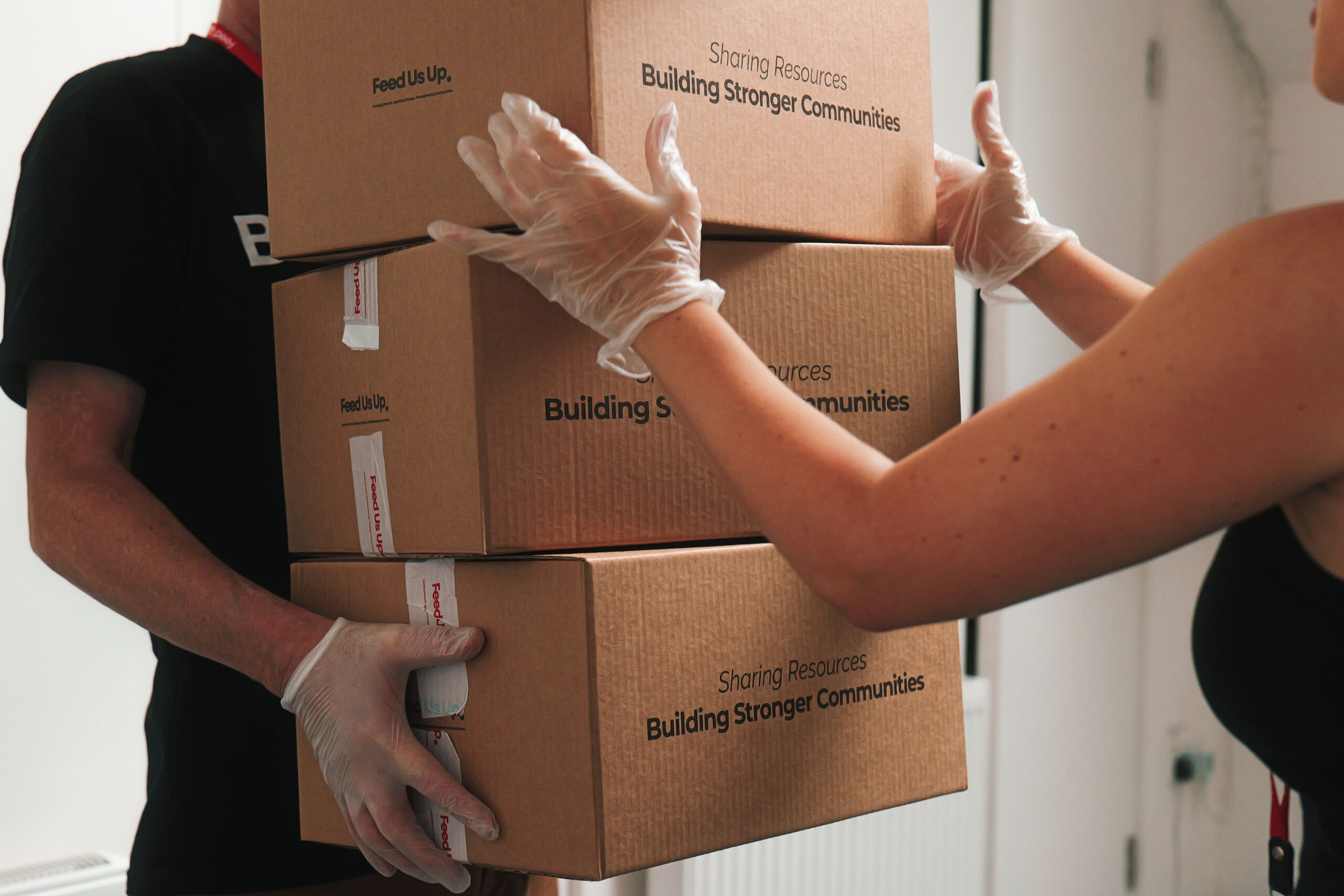
Volunteers, by contrast, are embedded in the communities they serve. They make redistribution physically accessible by collecting and delivering items to those unable to travel. Where apps rely on users coming to them, volunteers go directly to those in need.
Digital systems can play an important role in connecting people with support, but they may not always reach individuals facing barriers such as digital exclusion, transport challenges, or limited awareness of available services.
This is where community-based volunteering plays a vital role. Volunteers help bridge these gaps by creating personal connections and ensuring support reaches people in a way that feels accessible and dignified.
This door-to-door engagement builds trust and dignity. Individuals are far more likely to engage with support run by neighbours than with faceless systems.
In turn, this destigmatises poverty and resource insecurity. Support feels relational rather than transactional, and volunteers help create continuity and strengthened social networks.
Too many support structures still depend on navigating complex processes, and while powerful, these systems can unintentionally exclude those who could benefit from them the most.
Barriers such as digital access, transport, and time all contribute to this gap.
This highlights the need for more inclusive, reliable forms of redistribution, alongside a renewed commitment to building a culture of sharing that reduces waste and strengthens community support.
How FEED US UP responds
This is where FEED US UP steps in. We are building a model where communities support one another to create direct, measurable impact.
We operate with the belief that sharing skills, tools and tangible assistance drives meaningful change and that redistribution works best when it is rooted in community.
In April, we began a partnership with Ruils Independent Living, a user-led charity in South-West London supporting disabled people to live independently.
We provide regular grocery support to the people they support, ensuring consistent access to food and reducing the isolation that traditional systems often overlook.
Our partnership with Neighbourly strengthens this further, connecting us with supermarkets so we can collect surplus groceries and redirect them to those who need them most.
This creates a steady, reliable flow of food and essential items, and cultivates a culture of support within local communities.
Volunteers act as the backbone of our accessibility model, ensuring redistribution is built on meaningful relationships rather than logistics alone.
Why volunteering matters
Whilst providing resources directly is a core pillar of our mission, effective and sustainable giving is about more than meeting immediate needs.
It is about strengthening social connections, reducing waste and creating resilient community foundations that last.
We envision communities where surplus food, essential items and everyday resources flow directly to those who need them, supported by neighbours who understand their lived realities and ensure that these resources circulate fairly.
This is the future we are working towards at FEED US UP: a community-powered collective that replaces scarcity with solidarity and transforms surplus into shared opportunity.
EVERY ACT OF SHARING STRENGTHENS THE SYSTEM IT EXISTS WITHIN
By Olivia Mepham