
From Surplus to Support: The Environmental Case for Food Redistribution
FOOD REDISTRIBUTION IS NOT SIMPLY ABOUT PREVENTING WASTE; IT IS ABOUT CREATING LASTING ENVIRONMENTAL AND SOCIAL BENEFITS
Introduction
Every day, perfectly good food is thrown away while millions of people struggle to afford their next meal. It sounds like a contradiction, yet it happens on an enormous scale across the UK and around the world.
The good news is that food redistribution offers a practical solution, one that tackles environmental waste while helping communities thrive.
The Scale of the Food Waste Problem
Globally, around 1.05 billion tonnes of food were wasted in 2022 across households, food service and retail. That is equal to more than one billion meals wasted every day (UNEP, 2024). At the same time, hundreds of millions of people face hunger or food insecurity.
In the UK, food waste remains a serious issue. WRAP’s latest UK food waste and surplus data shows that millions of tonnes of food are wasted across households, hospitality, retail, manufacturing and farming (WRAP, 2025).
This includes food that was once perfectly edible but never reached the people who needed it.
Why Food Waste Matters for the Environment
Food waste is also responsible for an estimated 8–10% of global greenhouse gas emissions, making it a major contributor to climate change (UNEP, 2024; UNFCCC, 2024).
When food is wasted, it’s not just the food itself that is lost. Each loaf of bread, bag of salad, or carton of milk represents the resources needed to produce it.
Discarding a loaf of bread means wasting the water used to grow the wheat, the energy required to bake it, the packaging that protects it, and the fuel used for transportation. Every food item embodies valuable resources such as water, energy, land, and labour that are often wasted (FAO, 2013).
The environmental impact becomes even worse when food is sent to a landfill. As food breaks down, it can produce methane, a powerful greenhouse gas.
This adds to the wider climate crisis and increases pressure on the planet’s natural resources. Food waste, therefore, sits at the centre of several environmental problems: emissions, pollution, resource overuse, and unnecessary pressure on food systems.
Food waste also leads to unnecessary packaging waste. Plastic, cardboard, glass and metal packaging all require resources and energy to produce, meaning they are wasted when edible food is discarded.
By redistributing surplus food instead of throwing it away, we can reduce both food waste and the environmental impact of its packaging.
Food Redistribution: A Smarter Solution
Food redistribution offers a practical way to reduce waste while ensuring edible food reaches people who need it most.
Surplus food from supermarkets, farms, manufacturers, wholesalers, restaurants and caterers is collected and redirected to charities, community organisations, food banks, schools and shelters rather than being discarded.
Keeping food in the food system is more sustainable than disposing of it.
Research by the Carbon Trust found that FareShare’s redistribution of 6,699 tonnes of surplus food avoided more than 10,000 tonnes of CO2 emissions and saved over 10 million cubic metres of embedded water (Carbon Trust, 2023).
Across the UK, organisations are already demonstrating the impact of this approach.
FareShare redistributes surplus food to thousands of charities and community groups, supporting services such as school breakfast clubs, lunch clubs for older people and homeless shelters (FareShare, 2024).
Similarly, The Felix Project rescued and redistributed the equivalent of 38 million meals to more than 1,200 community organisations and schools across London in 2024 (The Felix Project, 2024).
These examples show that food redistribution is not simply about preventing waste; it is about creating lasting environmental and social benefits.
Helping People While Protecting the Planet
The social impact is just as important as the environmental one.
Redistributed food can support people facing food insecurity, including families under financial pressure, older people, people experiencing homelessness, refugees, students, and individuals in crisis.
It can also help community organisations stretch limited budgets, allowing them to provide meals, social spaces and wider support.
How Feed Us Up Is Making a Difference
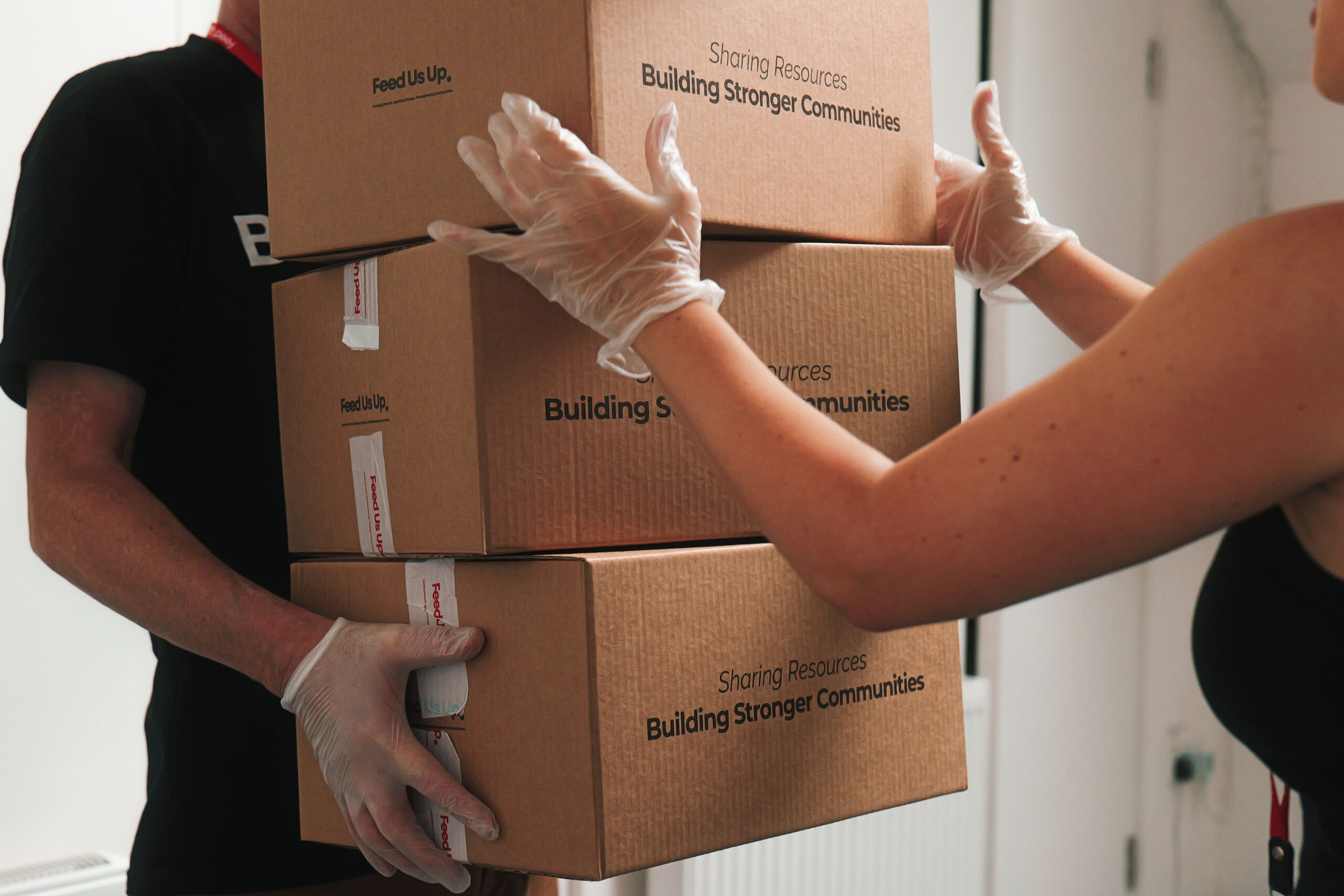
Feed Us Up plays a crucial role in addressing food waste.
We partner with businesses, charities, food redistribution organisations, and community groups to ensure that surplus food and other valuable resources reach those who need them most, rather than being wasted.
By connecting organisations with available resources to trusted local partners, we help reduce waste while creating a lasting environmental and social impact.
Our approach is based on collaboration because tackling food waste cannot be achieved by a single organisation alone.
By linking businesses with communities, we ensure that quality food is shared, resources are used more efficiently, and more individuals receive the support they require.
EVERY MEAL REDISTRIBUTED IS ONE LESS MEAL WASTED
Building a More Sustainable Future
Food redistribution will not solve every issue in the food system on its own.
Long-term change also requires better production planning, fairer access to food, stronger policy and reduced waste at every stage.
However, redistribution is one of the most immediate actions we can take. It uses what already exists, reduces environmental harm and supports people now.
By choosing redistribution, businesses and communities can reduce waste, lower their environmental impact and help build a fairer, more sustainable future.
At Feed Us Up, we believe that real change begins with sharing what we already have. Surplus food is not waste; it represents an opportunity to support people, strengthen communities, and protect the environment.
Every meal redistributed means one less meal wasted and another chance to make a positive impact.
By collaborating, businesses, charities, and local communities can build a future where good food is shared, not discarded.
By Ivana Godicheau